The Marketing Management Practice
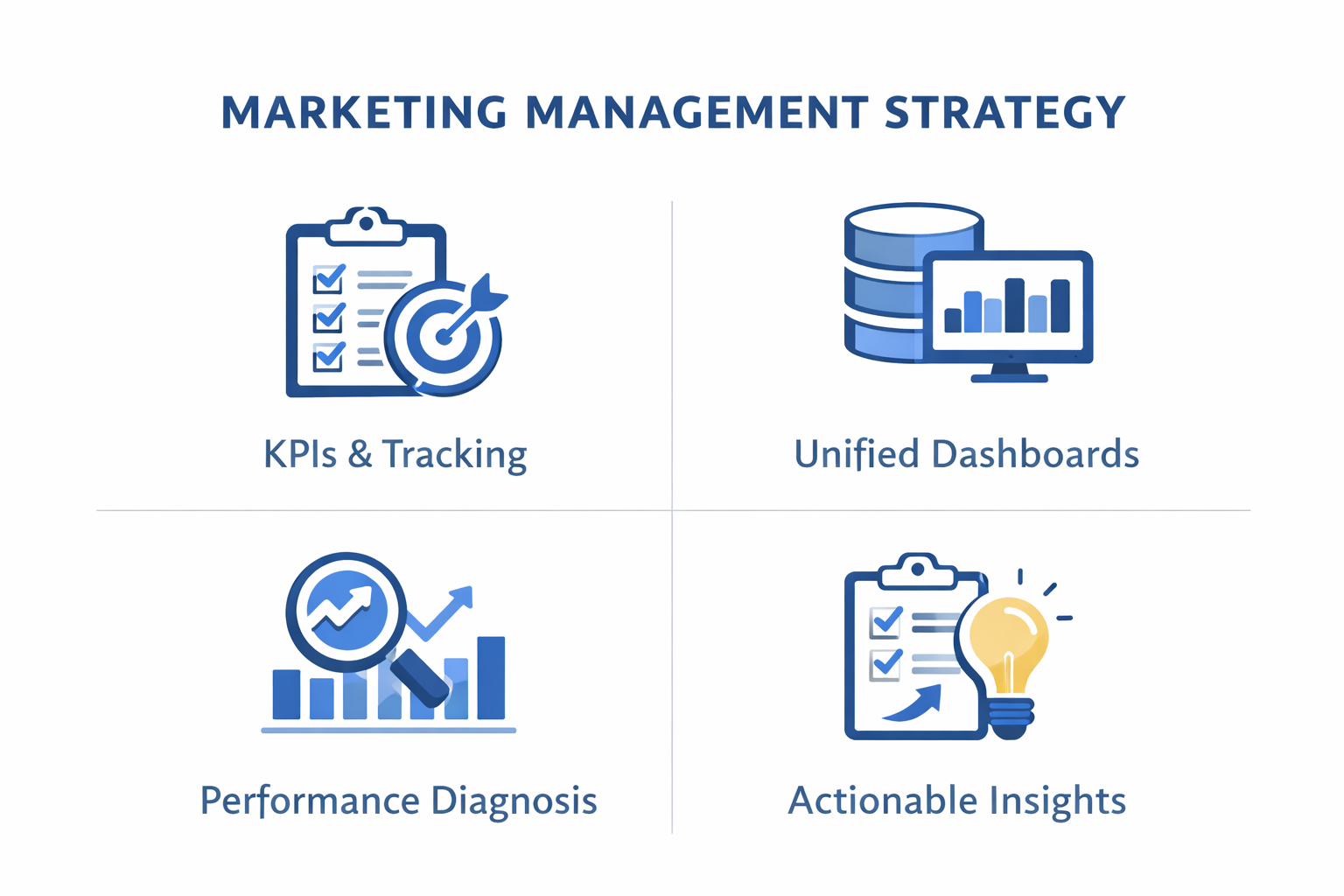
Endgame Analytics approaches marketing management as a closed-loop system, consisting of four interdependent layers, each of which answers a primary question (PQ).
1. Measurement Architecture
PQ: “What exactly are we measuring, and why?”
Before optimization can occur, measurement must be correctly defined.
Key activities include:
Defining primary and secondary KPIs aligned to revenue and growth objectives
Establishing event tracking and conversion logic within GA4
Ensuring consistency in naming conventions, attribution logic, and reporting periods
2. Data Integration & Reporting
PQ: “What is happening right now across our marketing system?”
Once metrics are defined, data must be aggregated and presented in a way that supports decision-making.
This includes:
Connecting GA4, advertising platforms, and other data sources to Looker Studio
Designing executive-level dashboards focused on outcomes, not vanity metrics
Automating recurring reports to reduce manual analysis and reporting friction
3. Performance Diagnosis
PQ: “What is driving performance (and what is holding it back)?”
With clean reporting in place, analysis can move beyond observation into diagnosis.
Typical analytical outputs include:
Channel-level ROI and efficiency analysis
Funnel performance and drop-off identification
Content and landing page performance comparisons
Trend analysis across time, segments, and campaigns
4. Strategic Prioritization & Action
PQ: “What should we do next, and why does it matter?”
Insights are only valuable if they lead to action. Endgame Analytics emphasizes translating analysis into prioritized recommendations.
This may include:
Reallocating spend across channels based on marginal returns
Identifying CRO opportunities based on funnel bottlenecks
Informing content strategy using engagement and conversion data
Supporting experimentation roadmaps and testing plans
Expected Outcomes
Clients engaging in Marketing Management services can expect:
Clear visibility into marketing performance tied to revenue outcomes
Reduced reporting overhead and improved decision velocity
Better capital allocation across marketing channels
A repeatable framework for evaluating marketing initiatives over time
Rather than reacting to surface-level metrics, leadership teams gain a structured system for managing growth.
Any questions? Email me directly: mike@endgameanalytics.com