Customer Segmentation for SMBs: Turning Data Into Action
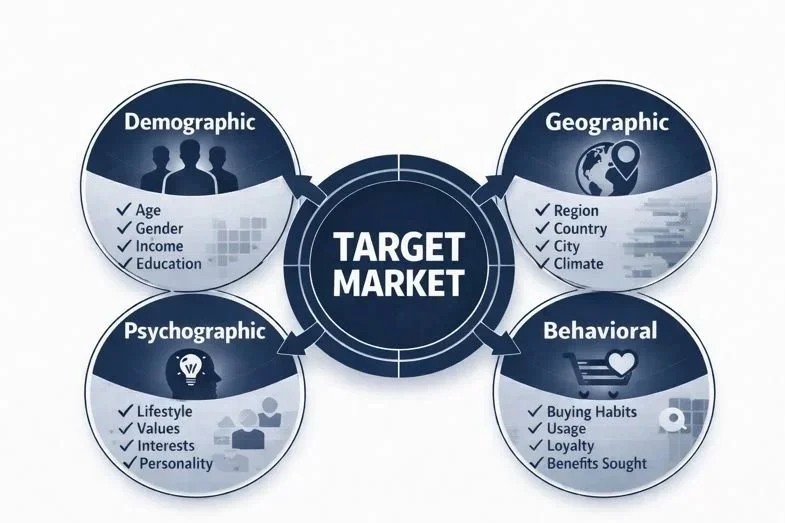
Most small and mid-sized businesses collect more customer data than they realize. Website traffic, purchases, email engagement, and product behavior are all being logged somewhere. Endgame Analytics helps turn that data into better decisions.
Customer segmentation is the bridge between raw data and effective marketing strategy
.
Why customer segmentation matters:
Many SMBs still treat their customers as a single group. Marketing messages are broad, promotions are generic, and conversion optimization efforts are scattered. This approach becomes increasingly expensive as competition rises and acquisition costs increase.
Customer segmentation solves this by identifying naturally occurring groups of customers based on real behavior, not assumptions. Instead of guessing who your customers are, segmentation lets the data speak.
When done correctly, segmentation allows businesses to:
Target marketing spend more efficiently
Personalize messaging without manual effort
Identify high-value and at-risk customers
Prioritize CRO and product improvements
Automate reporting and performance tracking
What data is needed:
Effective segmentation does not require massive datasets or advanced AI infrastructure. Most e-commerce and digital businesses already have what they need.
Typical inputs include:
Purchase frequency
Average order value
Basket size or product diversity
Time between purchases
Price sensitivity indicators
Geographic or channel-level behavior
The key is transforming transactional data into customer-level metrics that reflect how people actually interact with the business.
How segmentation works in practice:
At a high level, segmentation follows a structured analytical process:
Data preparation
Transactional data is cleaned and aggregated to the customer level.Feature engineering
Behavioral variables are created to capture spending patterns, loyalty, and engagement.Clustering analysis
Statistical techniques identify customer groups with similar behavior. These clusters are validated for stability and interpretability.Segment profiling
Each segment is translated into a clear business profile - a description leadership and marketing teams can act on.
The output is not a model for its own sake. The output is clarity.
What the segments typically reveal:
While every business is different, segmentation studies often surface patterns such as:
High-intent repeat buyers who drive disproportionate revenue
Content-driven or exploratory customers early in the funnel
Price-sensitive or promotion-driven shoppers
Low-engagement customers with churn risk
Each of these groups requires a different marketing strategy, a different conversion path, and often a different reporting lens.
From insight to execution
Segmentation only creates value when it changes behavior. That is why it works best when paired with:
Targeted messaging and campaign design
CRO experiments tailored by segment
Automated dashboards that track segment-level performance over time
This turns segmentation from a one-time analysis into a living operating system for marketing decisions.
Where Endgame Analytics fits in:
At Endgame Analytics, customer segmentation is treated as a foundational layer, not a standalone deliverable. It informs marketing management, conversion optimization, and automated analytics workflows.
The goal is simple: help businesses stop guessing and start allocating time, budget, and effort where it matters.
